
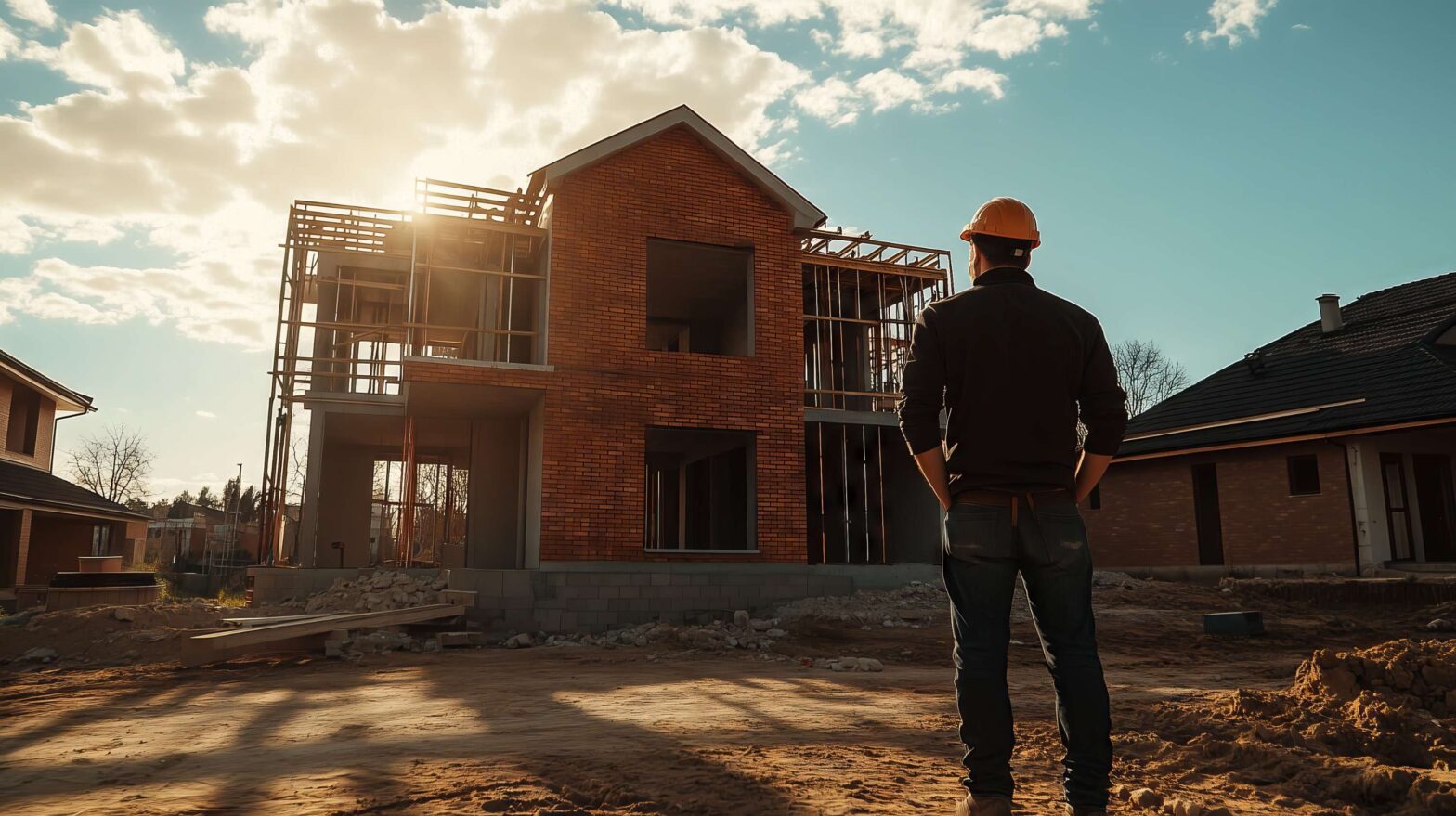
Home construction in Gatineau may seem more economical when self-managed. On paper, eliminating management fees appears logical. In reality, the situation quickly changes. Gaps arise from unforeseen issues, technical mistakes, and approximate coordination. A poorly structured project often exceeds its initial budget. Profitability therefore depends less on being “self-managed” than on the ability to control every variable from the outset.
What you actually have to handle in self-management
Managing a home construction project involves full responsibility. No intermediary filters decisions or structures the steps. Every choice rests directly on the person leading the project.
Coordination becomes central. Trades do not work in parallel without preparation. Each team depends on the previous one’s work. A lack of validation at the right moment blocks the entire site.
In Gatineau, this responsibility also includes municipal requirements. A permit must be obtained before any work begins. Inspections occur at specific stages. A refusal immediately stops the work.
The role goes beyond supervision. It involves active, daily management, with ongoing decisions to make.
Where costs shift without being visible at first
The main argument for self-management is saving on management fees. These fees usually represent between 10% and 20% of a residential project. This saving decreases as soon as certain factors come into play. Material purchases are often made at higher prices without a professional network. Ordering errors or incorrect quantities lead to immediate losses.
Unforeseen issues also weigh into the calculation. They represent on average 5% to 10% of the total budget. Without supervision, these issues become more frequent and more costly.
Time is another factor. A project that drags on generates indirect costs. Extended financing, temporary housing, and additional costs related to delays. The project becomes more expensive without it being immediately visible.
Technical decisions that make the difference
The profitability of a project depends on the quality of decisions made before and during construction. A technical mistake never remains isolated. It impacts several elements of the project. An unsuitable structural choice complicates the following stages. Poor site placement leads to costly adjustments. Each late modification triggers a chain reaction.
The level of precision in plans plays a direct role. Incomplete plans create different interpretations among stakeholders. This generates inconsistencies and rework.
The selection of contractors also influences the outcome. Without experience in the local market, it becomes difficult to assess the true quality of a contractor. Poor execution often requires full correction. Home construction in Gatineau becomes a sequence of structuring decisions. Profitability depends directly on their quality.
Regulatory framework and local constraints
Building in Gatineau involves a precise framework. Each lot has its own constraints. Placement, height, setbacks, construction type. These parameters influence the design from the outset.
Municipal regulations define these limits precisely. A non-compliant project must be modified before approval. The climate adds another constraint. Certain phases must be planned according to the seasons. Foundations and exterior structure are highly dependent on conditions. Resource availability also varies depending on the time of year. Poor scheduling lengthens delays between stages. This directly impacts the budget.
Self-management therefore requires a precise understanding of this environment. Without this control, risks increase rapidly.
The logic of a project that stays under control
A well-structured construction project relies on a clear sequence. Each phase depends on the previous one. Site analysis determines the plans. The plans determine the construction. In practice, the stages of a home construction project follow a strict schedule. Any change along the way creates a domino effect.
The average duration of a project ranges between 6 and 12 months depending on its complexity. This timeframe assumes efficient organization. A controlled project relies on anticipation. Key decisions are made before construction begins. Adjustments then become minimal.
Without this logic, the project becomes difficult to stabilize. Costs and timelines keep shifting.
What structured supervision actually changes
Some projects quickly reach a high level of complexity. At this point, self-management shows its limits.
O Design, a project manager in Gatineau, intervenes on the overall coherence of the project. The design integrates real constraints from the outset. Plans align with the land and the budget. Managing bids allows for selecting appropriate contractors. This reduces gaps between estimation and execution. Site supervision ensures continuity. The stages follow one another without major disruption. Decisions remain centralized and structured. Custom plans avoid late adjustments. Each choice fits into a global logic. The project remains clear from start to finish.
In the context of home construction in Gatineau, this supervision reduces areas of uncertainty. It transforms an unstable project into a controlled process.
Verdict: profitable or not depending on the profile and the project
Managing your own home construction in Gatineau can be profitable in specific cases. The project must remain simple, the land without major constraints, and the person must have time, basic technical knowledge, and a solid network.
In most situations, profitability quickly declines. Coordination errors, rework, and extended timelines cancel out the expected savings. The final cost becomes equivalent, sometimes higher, than a supervised project.
The real issue is not eliminating management fees. It is avoiding invisible losses that appear during construction.
Before deciding, it is better to confront your scenario with on-site reality. A discussion with O Design helps validate feasibility, identify risk areas, and adjust the project so it remains profitable, from the first plans to delivery.
FAQ’s
Does managing a home construction project alone really save money?
Yes, but only on simple and well-controlled projects. As complexity increases, errors and delays quickly reduce the expected savings.
What is the main risk in self-management?
The lack of coordination between stakeholders. Poor sequencing of work leads to delays and additional costs that are difficult to recover.
How long does a home construction project take in Gatineau?
A standard project generally lasts between 6 and 12 months. This timeframe assumes efficient organization and few unforeseen issues.
Are unforeseen issues common in home construction?
Yes, they are part of the project and often represent between 5% and 10% of the budget. Without structured supervision, their impact can become greater.
When should supervision be considered for a home construction project in Gatineau?
As soon as the project involves multiple stakeholders or technical constraints. Supervision helps secure decision