

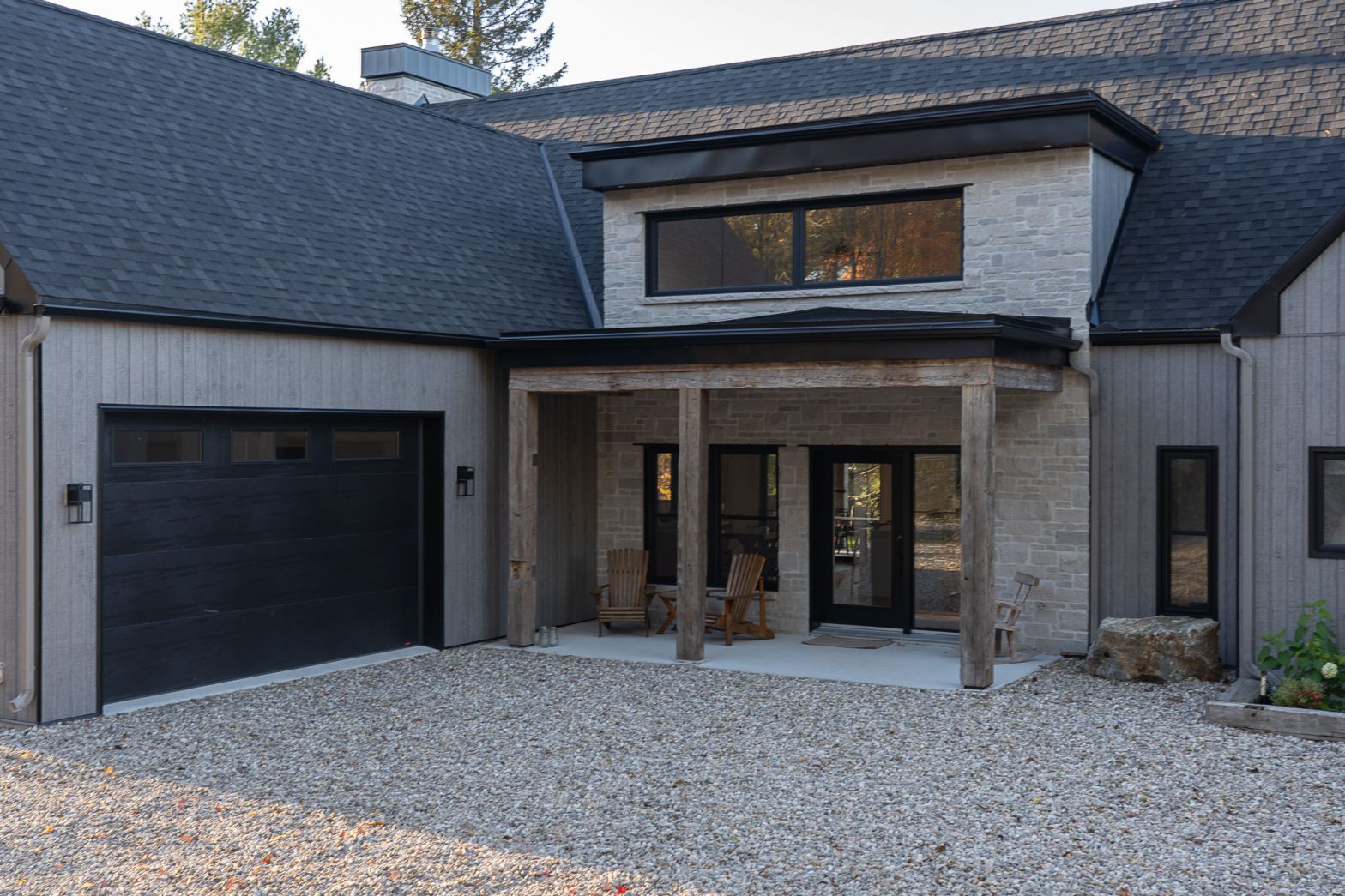
An interior designer should be involved when key decisions begin, not when the project is already locked in. This issue is common: homeowners consult too late, after irreversible choices have been made. The reasons are simple: lack of understanding of an interior designer’s role, confusion with decoration, or the desire to save money. The result is immediate: costly changes, technical inconsistencies, and a loss of project value. The solution is to involve a designer from the earliest key stages, depending on the type of project. In Gatineau, firms like O Design step in precisely at these moments to avoid late adjustments and optimize decisions from the start.
New construction: before final plans are completed
In a new home construction project in Gatineau, an interior designer should ideally be involved before technical plans are finalized. This is when decisions have the greatest impact and the lowest cost.
In practical terms, the designer works on spatial layout, circulation, and how spaces are actually used. For example, repositioning an open kitchen or adjusting a living room orientation can prevent structural changes later. Moving a wall after construction can cost between $1,500 and $5,000, while an early adjustment creates no additional cost. In addition, certain technical decisions directly depend on interior design. The placement of outlets, lighting fixtures, and plumbing connections all influence the construction process.
In Gatineau, climate constraints also play a role. Room orientation, natural light management, and insulation all affect interior comfort. An experienced interior designer integrates these elements from the beginning, working alongside the contractor.
Major renovation: before any demolition
In a full renovation, hiring an interior designer before starting work is a strategic step. Once demolition begins, flexibility is significantly reduced.
The designer first analyzes the existing structure: framework, technical constraints, and transformation potential. For example, opening a load-bearing wall requires structural validation. According to guidelines from the Régie du bâtiment du Québec, any structural modification must be planned and approved before work begins.
Next, the designer establishes an overall vision. This includes materials and colors, but more importantly, spatial consistency. Renovations without a global plan often lead to inconsistencies: incompatible finishes, inefficient layouts, or poorly adapted lighting.
Another key factor is budget. In renovations, unexpected costs typically represent 10 to 20% of the total budget. An interior designer helps reduce these gaps by identifying risks early and prioritizing interventions.
Interior layout without construction: at the moment of key decisions
Even without renovation work, an interior designer becomes relevant as soon as decisions affect daily use. This includes space planning, furniture selection, and layout optimization.
A common case involves open spaces. Without prior planning, they quickly become poorly structured. The interior designer defines functional zones: circulation, relaxation areas, and workspaces. This goes beyond aesthetics and focuses on real-life use.
In this type of project, the right moment is when the first purchasing decisions are made. Buying furniture before having an overall vision often leads to mistakes: incorrect dimensions, inconsistent styles, or poor ergonomics.
Rental or resale projects: before going to market
In a real estate investment context in Gatineau, an interior designer should be involved before listing a property for rent or sale. The objective is clear: maximize perceived value.
A well-designed property rents or sells faster, sometimes at a more favorable price point. This relies on specific choices: durable materials, neutral colors, and optimized layouts.
The interior designer adapts the project to the local market. In Gatineau, expectations vary depending on neighborhoods and property types. A condo designed for young professionals differs from a family home.
This is also where details make the difference. Lighting, finishes, and overall coherence directly influence a buyer’s or tenant’s decision. A well-executed project reduces vacancy time and improves profitability.
O Design: involving a designer at the right time
In Gatineau, O Design steps in precisely at the stages where decisions have the greatest impact on the project. The approach is based on a practical understanding of needs and constraints.
In new construction, involvement starts at the design phase to align plans with real-life usage. In renovation, analysis comes before the work to prevent costly changes. For layout projects, recommendations are based on daily use rather than trends.
O Design also works on real estate investment projects. The goal is to optimize perceived value and profitability while considering the Gatineau market.
This positioning helps avoid common mistakes: late decisions, technical inconsistencies, and budget overruns. The interior designer becomes a driver of coherence and performance, not just an aesthetic contributor.
If you want to move forward with clarity, schedule a discussion with O Design to define your project now.
FAQ’s
When should you consult an interior designer in Gatineau?
From the earliest stages of the project, before technical or structural decisions are finalized. The earlier the involvement, the greater the impact on space organization and costs. Waiting too long limits possible adjustments and increases the risk of costly modifications.
Is an interior designer useful for a small renovation?
Yes, even for a limited project, because layout or material selection mistakes can quickly become more expensive than expected. An interior designer provides a coherent overall vision from the start. This prevents inconsistencies and optimizes every decision, even on a small scale.
What is the difference between an interior designer and a decorator?
An interior designer works on structure, space organization, and technical constraints. A decorator focuses mainly on aesthetics, such as colors, furniture, and accessories. The two roles are complementary, but their impact on a project is not the same.
How much do interior designer services cost in Gatineau?
Fees vary depending on the scope of the project, level of support, and the designer’s experience. In Gatineau, rates often range between $75 and $150 per hour, although some projects are billed at a flat rate. The cost mainly depends on complexity and level of involvement.
Can you hire an interior designer after construction has started?
Yes, but intervention options are more limited once the work is underway. Some technical decisions can no longer be changed without significant additional costs. The designer can still adjust certain elements, but the impact is lower than during the early stages.